Providence isn't uniform dirt. The glacial till up in College Hill behaves nothing like the fine-grained estuarine silts you hit digging a foundation near the Woonasquatucket River. That difference in clay fraction and organic content changes everything about how the soil will swell, shrink, or lose strength when it rains. Atterberg limits testing gives you the numbers behind that behavior. The liquid limit, plastic limit, and plasticity index from ASTM D4318 tell you exactly how much water the soil can take before it stops being a solid and starts flowing. For projects in Federal Hill or Fox Point, where fill and natural deposits mix unpredictably, skipping this classification is a gamble on settlement and lateral pressure. We combine these index tests with a grain size analysis to build the full USCS classification — no shortcuts, just the data Providence contractors need to size footings correctly.
A plasticity index above 25 in Providence's low-lying neighborhoods is a warning light. Don't ignore it when it shows up on the lab sheet.
Our approach and scope
Site-specific factors
Providence sits in a moderate seismic zone — USGS puts the hazard at roughly 10–15% g peak ground acceleration on rock for a 2,475-year return period. That's not San Francisco, but it's enough to trigger cyclic softening in saturated fine-grained soils with high plasticity. The last thing you want under a bridge abutment or a new mid-rise downtown is a sensitive clay that loses structure during shaking. Atterberg limits feed directly into the liquefaction susceptibility screening: soils with PI > 18 and LL > 35 often behave differently than clean sands, and the simplified procedures from Seed & Idriss and Bray & Sancio need that index data to avoid misclassification. Providence's waterfront areas combine a shallow water table with soft silts and organic clays — the kind of profile where even a small miscalculation in drainage behavior can delay a project by months. Knowing the Atterberg profile early lets the geotechnical engineer decide whether to excavate, stabilize, or replace before costly structural decisions lock in.
Relevant standards
ASTM D4318 – Standard Test Methods for Liquid Limit, Plastic Limit, and Plasticity Index of Soils, ASTM D2487 – Standard Practice for Classification of Soils for Engineering Purposes (Unified Soil Classification System), IBC 2021 / Rhode Island State Building Code (adopts IBC with amendments), ASCE 7-22 – Minimum Design Loads and Associated Criteria for Buildings and Other Structures
Related services
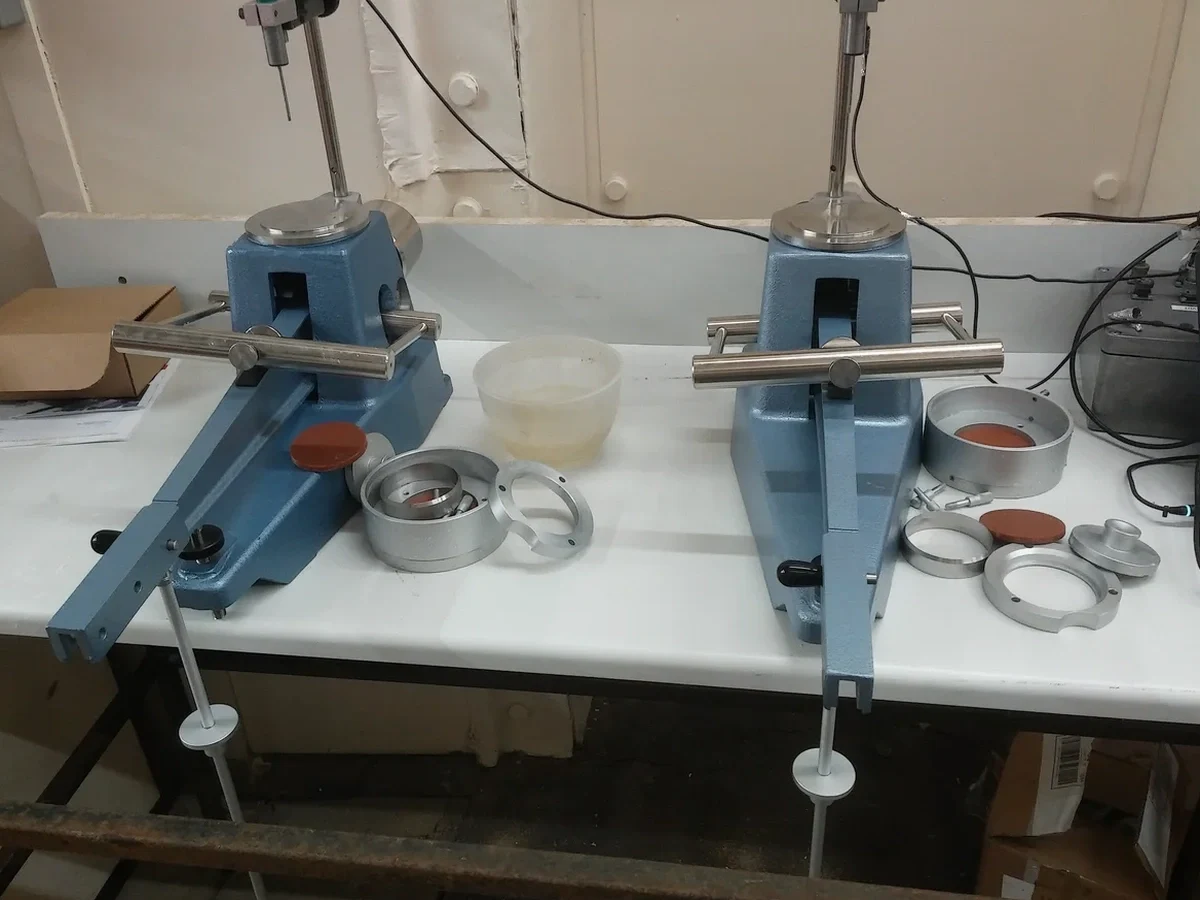
Full Atterberg Limits Suite
Liquid limit (multi-point Casagrande method), plastic limit, and plasticity index calculation. Includes the plasticity chart and USCS group symbol determination.
Combined Classification Package
Atterberg limits paired with sieve and hydrometer analysis per ASTM D422/D7928. You get the full particle-size distribution curve and the definitive soil class name in one report.
Typical parameters
Quick answers
What does an Atterberg limits test cost in Providence?
For a standard set — liquid limit, plastic limit, and plasticity index — budget between US$60 and US$90 per sample. The final fee depends on how many points you run for the liquid limit curve and whether you need a rush turnaround. We'll quote a firm number once we know the sample count.
How much soil do you need to run the test?
We need at least 150 grams of material that has been dried and passed through a No. 40 (425 µm) sieve. If you're sending a bulk sample, about 500 grams of the fine fraction is comfortable. The key is that the material must be representative of the layer in question — not a grab sample from the top of the bucket.
Can you test organic silts from the Providence River area reliably?
Yes, with caveats. Organic soils can give variable liquid limit results because the organic matter changes the water-holding structure. We oven-dry at 60°C instead of 110°C for organic samples to avoid burning off the organics, following the note in ASTM D4318. The resulting numbers are still useful for classification, but we always flag the presence of organics in the report so the engineer can apply judgment to the plasticity data.