Providence didn't grow on predictable ground. From the colonial-era wharves along the Providence River to the mill villages of Olneyville, the city's footprint expanded by filling in waterways and reshaping hills—leaving behind a mosaic of buried organic silts, demolition debris, and glacial outwash that complicates every structural load path. When you're placing a building on spread footings or a mat foundation here, the subsurface surprises start at three feet. Our shallow foundation design work accounts for that history without over-engineering the solution. We pair site-specific test pits with lab consolidation data to model bearing capacity in the upper five meters, where most Providence commercial and mixed-use projects transfer their loads. The goal is a foundation that meets IBC Chapter 18 requirements while keeping excavation costs aligned with the developer's pro forma.
In Providence, the difference between a $90k footing package and a $160k one is often just four feet of controlled fill and a properly sized keyway.
Our approach and scope
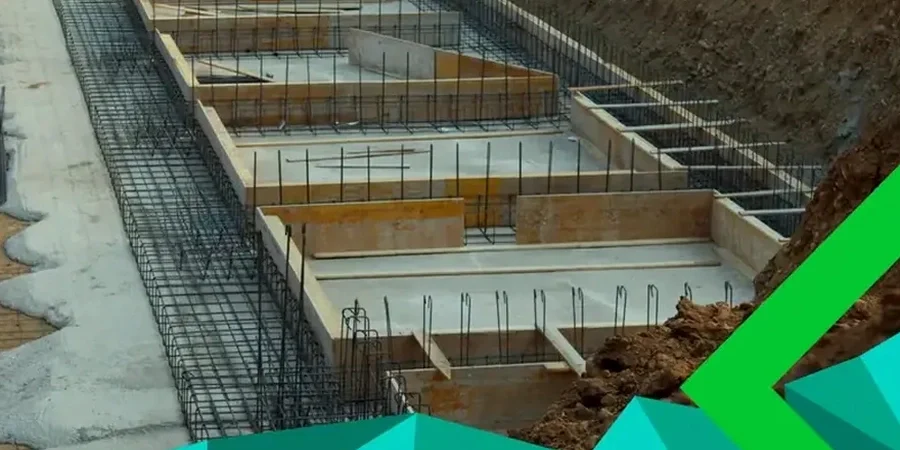
Site-specific factors
Here's something you learn after a few winters in Providence: street trees and footing drains don't mix. The city's dense neighborhoods—Federal Hill, Elmwood, Mount Pleasant—are lined with mature maples and oaks whose root systems extend laterally 20 feet or more, drawing moisture from the silty clays and creating shrinkage zones that can drop a footing corner half an inch in one season. Combine that with Providence's 49 inches of average annual precipitation and the freeze-thaw cycling that penetrates 36 to 42 inches into exposed grade beams, and you've got a recipe for progressive cracking that no amount of rebar will stop. We address this by specifying control fills below footings within the root influence zone and by designing stem walls with integral drainage that decouples the foundation from surface moisture fluctuations. On sites within the FEMA floodplain overlay—which covers significant portions of the Woonasquatucket corridor—we incorporate flood vents and scour protection details directly into the shallow foundation geometry.
Relevant standards
IBC 2021 (Rhode Island Building Code, amended), ASCE 7-22 Minimum Design Loads for Buildings, ACI 318-19 Building Code for Structural Concrete, ASTM D1586 Standard Test Method for SPT, ASTM D2487 Classification of Soils (USCS), FEMA P-55 Coastal Construction Manual (flood zones)
Related services
Bearing capacity & settlement analysis
We calculate net allowable bearing pressure using site-specific shear strength data—not table values—and run total and differential settlement estimates under the controlling ASCE 7 load combinations, flagging any exceedance of the IBC serviceability limits before the structural engineer locks in column loads.
Mat & raft foundation design
For low-bearing fill zones and floodplain sites, we model the mat as a semi-rigid plate on an elastic subgrade, optimizing thickness and reinforcement to bridge soft pockets while keeping concrete volume within budget.
Construction subgrade verification
During excavation, we perform proof-rolling observations and in-place density testing to confirm that the bearing stratum matches the design assumptions, issuing a field report that satisfies the special inspection requirements of IBC Chapter 17.
Typical parameters
Quick answers
What does shallow foundation design cost for a typical Providence commercial building?
For a single-story commercial structure or a three-story mixed-use building on a standard Providence lot, the complete design package—including soil borings, lab testing, bearing capacity calculations, and a stamped engineering report—ranges from US$1,980 to US$3,000. The final figure depends on the number of borings required, whether test pits are needed to expose fill boundaries, and the complexity of the settlement analysis.
How deep do footings need to go in Providence to get below the frost line?
The Rhode Island Building Code requires a minimum footing depth of 42 inches below finished grade to protect against frost heave. However, in Providence's older neighborhoods where urban fill extends deeper, we often specify 48 to 54 inches to reach competent natural soil, not just to satisfy the frost requirement.
Do you design mat foundations as an alternative to deep piles?
Yes—on sites where the cost of driving piles would break the budget but the upper soils are marginal for isolated footings, a reinforced mat foundation can distribute the load and reduce differential settlement to acceptable levels without going deep. We model the soil-structure interaction using subgrade reaction coefficients derived from in-situ testing, not generic table values, which keeps the design both conservative and efficient. More info.