The most common mistake we see on Providence job sites is treating the city’s soil as uniform. It isn’t. Much of downtown and the Jewelry District sits on loose granular fill and glacial outwash that can settle unevenly under load. A generic compaction plan won’t hold. Vibrocompaction design in Providence has to account for the sharp transition from dense till to compressible sands within a few hundred feet. Without a site-specific approach, you risk differential settlement that shows up as cracked slabs and misaligned equipment within months. We map these transitions before specifying probe spacing, vibration frequency, and duration. The process starts with understanding what’s beneath the surface—often a mix of natural deposits and historic fill that requires careful interpretation of subsurface data. When fill thickness exceeds eight feet, we often pair the vibro program with a sand cone density check to verify post-treatment uniformity across the grid.
Effective vibrocompaction in Providence depends less on equipment size and more on matching the grid pattern to the specific gradation of the glacial outwash.
Our approach and scope
Site-specific factors
Providence sits on the northern edge of the Narragansett Basin, underlain by Carboniferous sedimentary rocks mantled with glacial till, outwash, and thick pockets of post-industrial fill. The water table in low-lying areas near the Providence River can be as shallow as three to five feet below grade. Loose saturated sands in those zones pose a real liquefaction risk under the seismic loads defined by ASCE 7-22 for Providence County. A standard shallow foundation on untreated ground can lose bearing capacity during a design-level earthquake. Vibrocompaction design reduces that risk by densifying the granular matrix before structural loads are applied. We specify treatment grids that push relative density above 70%, verified by post-treatment CPT soundings. The coastal proximity also means higher chloride content in groundwater, which influences the durability requirements for any deep foundation elements. For projects near the Woonasquatucket River, we often recommend supplementing the vibro program with a liquefaction assessment that quantifies the factor of safety against flow failure.
Relevant standards
ASCE 7-22 Minimum Design Loads (Seismic), IBC 2021 Chapter 18 — Soils and Foundations, ASTM D1586 Standard Penetration Test, ASTM D2487 Classification of Soils for Engineering Purposes
Related services
Site-Specific Vibrocompaction Design
Grid layout, energy specifications, and quality control criteria developed from subsurface data. Includes pre- and post-treatment verification protocols tailored to the project footprint.
Liquefaction Mitigation Analysis
Seismic hazard evaluation per ASCE 7 for Providence County. We calculate factors of safety and specify densification requirements to meet project performance objectives.
Post-Treatment Verification Testing
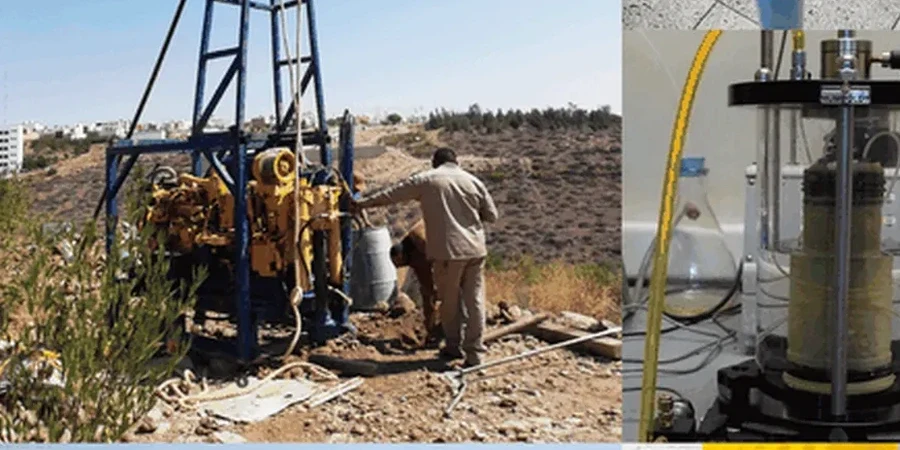
CPT and SPT drilling to confirm relative density gains across the treatment zone. We compare before-and-after data to document compliance with design specifications.
Typical parameters
Quick answers
What does vibrocompaction design cost for a typical Providence project?
For a standard commercial lot in Providence, vibrocompaction design fees run between US$1,610 and US$5,530 depending on the treatment area, depth, and number of verification points required. Small residential projects fall at the lower end; industrial sites near the port with deeper fill and tighter performance specs move toward the upper range.
How deep can vibrocompaction reach in Providence soil conditions?
In Providence glacial outwash and fill, we can effectively treat down to 40 feet with standard vibratory probes. Deeper treatment is possible but depends on the grain size distribution and groundwater level. Most projects in the city require treatment between 15 and 30 feet to reach competent natural soils.
What soil types in Providence respond well to vibrocompaction?
Clean granular soils with less than 15 percent fines respond best. Providence fill and outwash typically fall in this range—fine to medium sands with low silt content. When fines exceed 15 percent, we evaluate alternative methods because vibratory energy doesn't transmit efficiently through cohesive material.
How do you verify that the ground is dense enough after treatment?
We run CPT soundings or SPT borings on a preset grid after compaction and compare the results to pre-treatment data. Relative density must exceed the design threshold—usually 70 percent—across the entire treatment zone. We also check settlement benchmarks for a period after treatment to confirm stabilization.