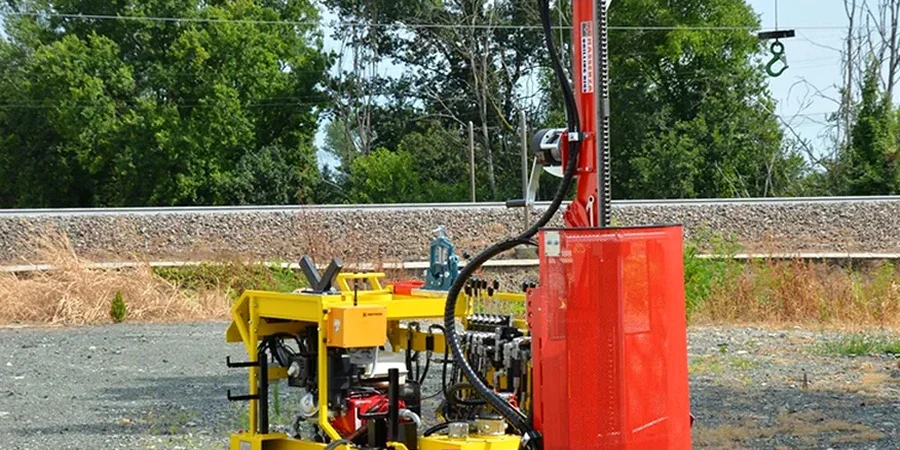
A CME-55 track-mounted drill rig moves into tight lots off Atwells Avenue, splitting spoon sampler ready. In Providence, SPT testing demands equipment that handles dense glacial till without losing energy transfer. The crew sets up over the borehole, safety hammer raised, waiting on the driller's signal. This is standard penetration testing per ASTM D1586: 140-pound hammer, 30-inch drop, counting blows for each 6-inch increment. Providence jobs often run 40 to 60 feet deep, cutting through fill and outwash before hitting refusal in the till. For sites near the Woonasquatucket River, we combine the drilling program with a CPT test when soft organic silts appear in the upper 15 feet and a continuous profile matters.
In Providence glacial till, N-values can jump from 12 to refusal within 24 inches — that transition line determines foundation type and cost.
Our approach and scope
Site-specific factors
Providence winters freeze the top 18 inches of fill from December through February, which throws off SPT blow counts if the rig starts before the ground thaws. Frozen crust returns N-values 30 to 50 percent higher than the same soil in spring, creating a false refusal that can kill a boring 20 feet too shallow. We schedule winter drilling after 10:00 AM once the sun has softened the surface, and we note ground temperature in every log. The other risk is the high water table along the Providence River corridor: boring below 12 feet often hits groundwater, and loose outwash sands can heave into the auger. A liquefaction screening is standard on these floodplain sites given Providence's seismic design category and the loose saturated sands mapped in the downtown area.
Relevant standards
ASTM D1586-18: Standard Test Method for Standard Penetration Test (SPT) and Split-Barrel Sampling of Soils, ASTM D4633-16: Standard Test Method for Energy Measurement for Dynamic Penetrometers, IBC 2021 Section 1803: Geotechnical Investigations, ASCE 7-22 Chapter 20: Site Classification Procedure for Seismic Design
Related services
SPT borehole program
Track-mounted drill rig, hollow stem augers, split spoon sampling at 2.5-foot intervals or at stratum changes. Logs include N-value, recovery, USCS classification, and groundwater observations.
Energy transfer measurement
ASTM D4633 testing with rod-mounted accelerometers to correct raw N-values to N60. Required when SPT data feeds liquefaction analysis or LRFD foundation design.
Laboratory index testing
Grain size distribution (ASTM D6913/D7928) and Atterberg limits (ASTM D4318) on selected split spoon samples to confirm field classification of fine-grained layers.
Typical parameters
Quick answers
What depth do SPT borings typically reach in Providence?
Most projects drill to 40–60 feet, stopping at practical refusal in the dense lodgement till. Shallower borings, around 25 feet, are common on the East Side where till is closer to grade. For deep foundations, we extend borings to 80 feet or more, depending on the pile tip elevation.
How much does SPT testing cost per boring in Providence?
A single SPT boring to 50 feet in Providence runs US$570 to US$750, depending on access, traffic control, and whether lab testing is included. Mobilization is typically quoted separately.
How soon do I get the boring logs?
Field logs are available the same day. Final signed logs with lab data and N60 corrections are delivered within 48 hours of completing the last boring.
Do you handle permit coordination with the City of Providence?
We manage Dig Safe notification, City of Providence street opening permits when required, and coordination with Providence Water for clearance near mains. The permit process typically adds 3 to 5 business days before mobilization.
What is refusal in Providence glacial till?
Refusal is defined as 50 blows for any 6-inch increment with less than 0.1 foot of penetration under the full 140-pound hammer. In Providence's lodgement till, refusal often occurs within the first 18 inches after the till contact is reached.