In Providence, the mix of dense glacial till and loose urban fill along the Woonasquatucket corridor creates layered conditions that standard borings alone can't resolve. We apply a full soil mechanics study to separate what’s competent from what will settle. The lab runs ASTM D2487 classification, consolidated-undrained triaxial, and one-dimensional consolidation on Shelby tube samples pulled from depths where the till transitions to varved clay. Field index testing gets paired with CPT testing when the stratigraphy suggests thin silt seams that a split spoon would miss. For projects near the Port of Providence, where the water table sits less than five feet down, we add permeability and collapse potential to the test program before anyone pours a footing.
Glacial till in Providence can hold two thousand psf bearing, but the organic silt beneath it consolidates under half that load.
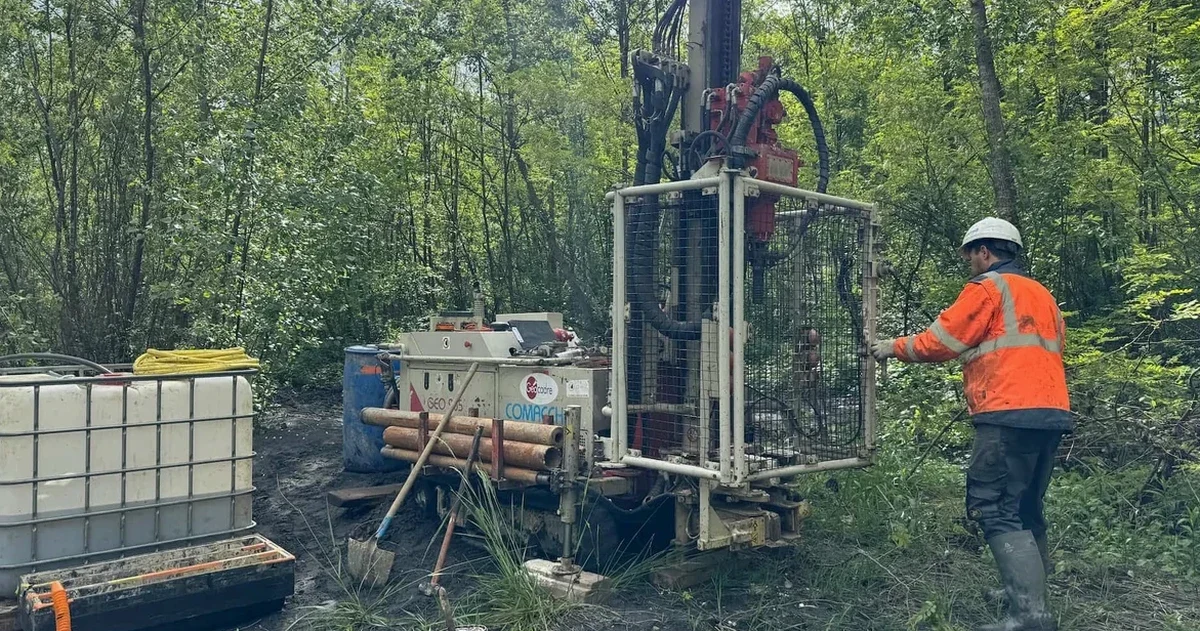
Our approach and scope
Local considerations
Providence sits at roughly ten feet above sea level along the hurricane barrier, and the M5.8 earthquake potential from the Clinton-Newbury fault zone puts site-specific shear strength data at the center of any deep foundation design. A soil mechanics study that skips dynamic testing leaves the engineer guessing on liquefaction susceptibility in the loose sand lenses common under the I-195 corridor. We run cyclic triaxial on undisturbed samples when the SPT N-value drops below eight in saturated fine sand, referencing Seed and Idriss simplified procedure for factor of safety against liquefaction. The Rhode Island State Building Code (SBC-1) references ASCE 7 Chapter 20 site classification, which requires Vs30 or undrained shear strength for Site Class F soils. Failing to characterize the organic silt with consolidation testing has led to differential settlement claims on College Hill infill sites that we’ve been called in to remediate. Without lab-derived parameters, the liquefaction assessment stays incomplete and the foundation design rests on assumptions the Providence building official won’t accept.
Applicable standards
ASTM D2487 (Unified Soil Classification), ASTM D4767 (Consolidated Undrained Triaxial), ASCE 7-22 Chapter 20 (Site Classification), ASTM D2435 (One-Dimensional Consolidation), IBC 2021 Section 1803 (Geotechnical Investigations)
Related services
Laboratory testing program
Triaxial CU with pore pressure measurement, consolidation with time-rate curves, Atterberg limits, grain size distribution, and direct shear on remolded fill samples. All testing follows ASTM methods and is documented in a sealed geotechnical report.
Geotechnical parameter report
We compile effective stress strength envelopes, consolidation settlement predictions, and lateral earth pressure coefficients for Providence projects. The report includes modulus values for numerical modeling and bearing capacity recommendations per IBC Section 1806.
Typical parameters
Quick answers
What does a soil mechanics study include for a Providence commercial building?
A full program for a commercial site in Providence typically includes undisturbed Shelby tube sampling, ASTM D2487 classification, consolidated-undrained triaxial testing on cohesive samples, one-dimensional consolidation tests, Atterberg limits, and grain size distribution. We also run moisture-density relations if compacted fill is part of the earthwork. The final report provides drained and undrained shear strength parameters, consolidation settlement estimates under the design footing loads, and site class determination per ASCE 7 for seismic design.
How much does a soil mechanics study cost in Providence?
A complete soil mechanics study for a typical commercial lot in Providence runs between US$3,330 and US$4,500, depending on the number of Shelby tube samples recovered, the triaxial test count, and whether consolidation testing is needed on multiple layers. Sites with deep organic silt or fill that require additional undisturbed sampling push toward the upper end of that range.
When is triaxial testing required instead of just SPT blow counts?
Triaxial testing becomes necessary when the design requires effective stress parameters for settlement analysis, or when the Providence Building Department requests site-specific shear strength for deep foundations. SPT N-values give an index, not a strength. In the varved clay and organic silt common under downtown Providence, blow counts can read 6 to 12 while the consolidated-undrained triaxial shows Su below 500 psf—a number that changes the foundation type. We also run triaxial when liquefaction assessment demands cyclic testing on undisturbed sand samples.